Engineering
Pushing the boundaries of automotive engineering with cutting-edge solutions.
Technological prowess drives Formula 1 innovation
Pushing the boundaries of automotive engineering with cutting-edge solutions.
Leading the charge in sustainable racing technologies.
Real-time data analysis shapes strategy and performance optimization.
Advanced research in airflow and downforce optimization.
Maximizing speed and efficiency through innovative solutions.
Augmented reality and virtual simulations are becoming increasingly important in Formula One, enabling teams to improve design and testing by simulating scenarios and testing components—such as aerodynamic changes—virtually without physical prototypes, while also enhancing the fan experience through apps that let users explore cars and tracks in 3D; these technologies have the potential to transform how Formula One is developed and experienced and are likely to become even more important in the years to come.
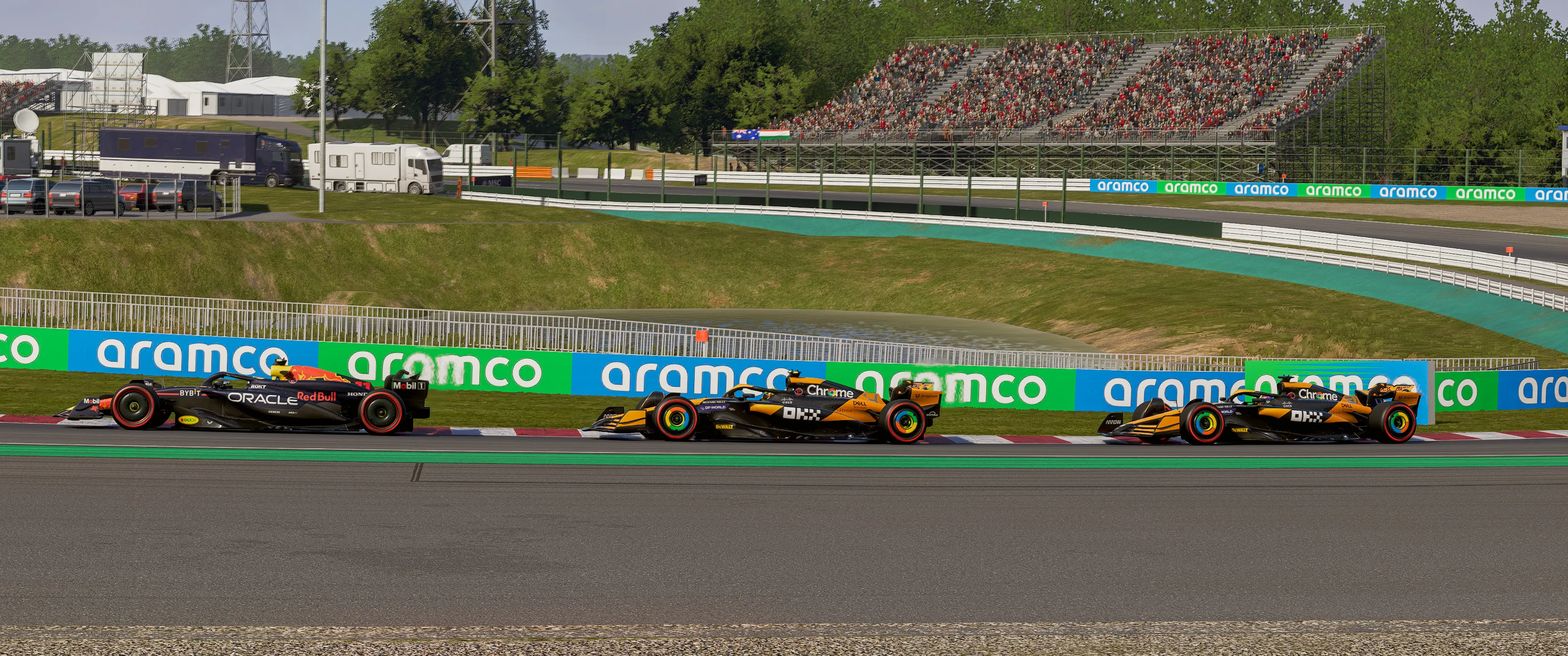
In recent years, Formula 1 has introduced technical changes—such as raising the minimum car weight and tightening rules around wind tunnel and simulator use—to improve safety and competitiveness while encouraging innovation and creativity, helping to ensure F1 remains at the forefront of automotive technology and reinforcing its reputation as one of the most exciting and dynamic motorsports in the world.
Gameplay Capture
Creator-recorded Formula 1 25 gameplay showing race starts, corner sequences, and in-car driver POV with steering wheel input.
Gameplay clips show how milliseconds are won through line choice, braking control, and driver feedback.
Clip
Formula 1 25 capture
Unofficial gameplay footage captured by Trackside. Not affiliated with or endorsed by Formula 1, FIA, or Codemasters/EA.
Eleven teams. Zero room for waste. The cost cap turns financial discipline into on-track performance.
Updated for 2026 financial regulations
Budget Ceiling
$215M base
+ inflation and event adjustments
Race Calendar
24 rounds
High-logistics full season
Teams Monitored
11 teams
New entrant impact in 2026
Compliance Focus
Audit-led
Breach risk carries sporting cost
Big spend no longer guarantees the front row.
Teams win by spending smarter, developing cleaner, and reacting faster.
The result is tighter gaps, more strategic variety, and stronger midfield fights.
Figures shown reflect 2026-era framework messaging: base cap plus regulation-defined adjustments.
Strategy Interface
Analytics, prediction layers, and telemetry signals shape every millisecond of Formula 1 performance.
Live data streams guide every race-day decision, from pit stops to tire choices.
Advanced models forecast tire wear, fuel strategy, and race outcomes for a competitive edge.
Every move is optimized—data turns milliseconds into podiums.
From factory to finish line, everyone works toward a single mission: performance. Designers, mechanics, and support staff all play a part. In F1, collaboration and unity turn potential into podiums.
Race engineers and strategists are the unsung heroes. They analyze live data, adapt to changing conditions, and guide the driver through every lap. Success relies on trust, quick thinking, and seamless communication.
Teamwork in F1 is a finely tuned operation. Pit crews execute lightning-fast stops, with each member playing a vital role. One mistake can cost seconds — and the race.